Immersion Heater Replacement: Test the Element Before You Swap It
Immersion heater replacement means changing the element, its thermostat or its cut-out, but only after testing which of them has failed. The supply, the timer and the thermostat are proved first, because a tripped cut-out or a melted fuse makes a working element look dead.
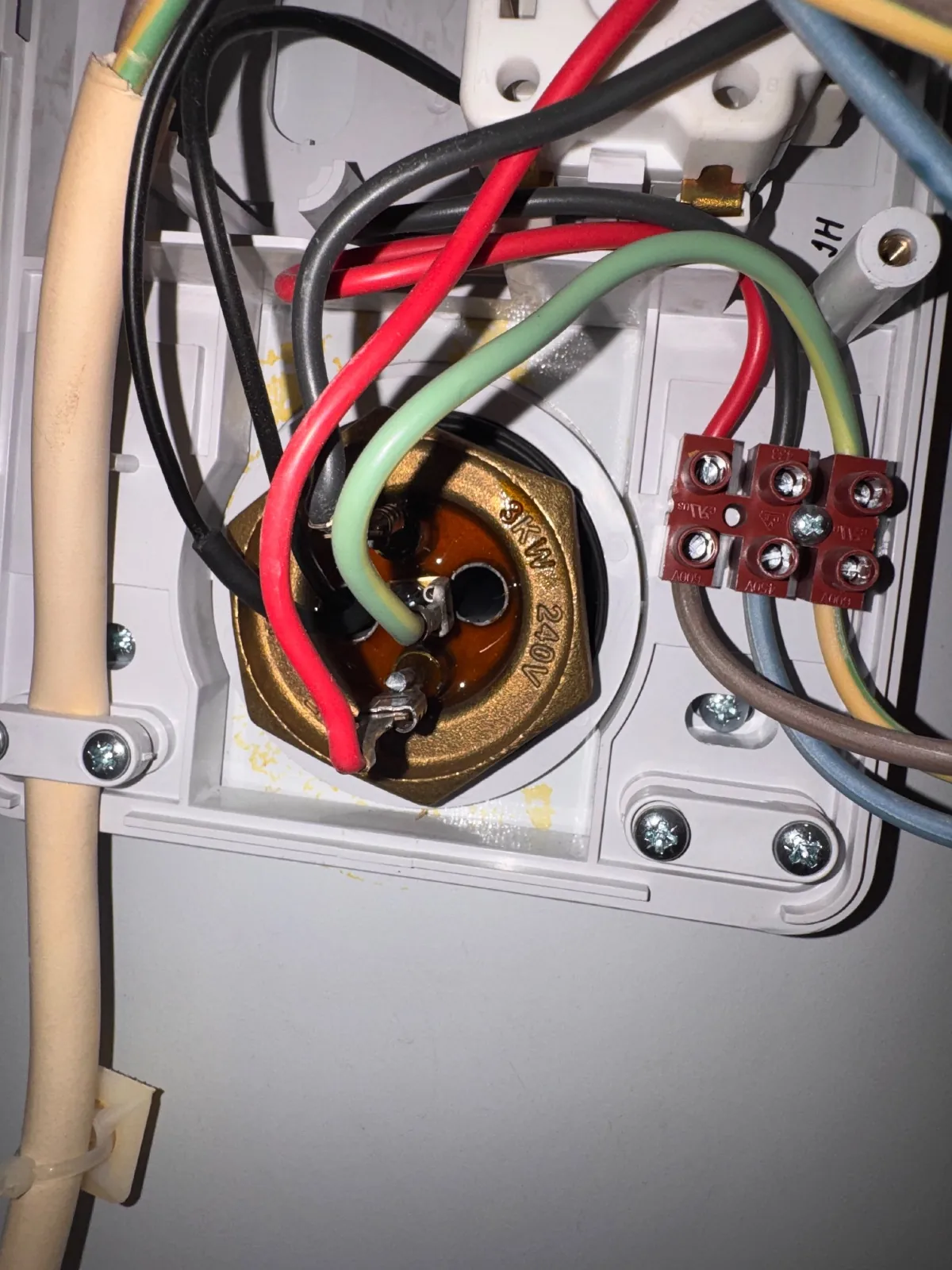
What the visit covers
- Tests of supply, thermostat, cut-out and element continuity
- Element, thermostat and high-limit cut-out replacement
- Boss and scale checks before a new element goes in
- Dual-element and boost setups
Fixed prices
What it costs
- Cylinder troubleshooting and diagnosis
- No call-out fee.
- £180Fixed price
No VAT is charged
There is no call-out fee
Order of work
Prove the supply and controls
Fuse, spur, timer and thermostat should be checked before the element is blamed.
Test the element
With power isolated and proved dead, resistance across the terminals and to earth is measured.
Replace the failed part
Element, thermostat or cut-out is swapped for the correct type and length with a new washer.
Refill, test and set
Leaks at the boss are checked, then the thermostat is set and the heater is run to confirm it heats.
How do I know the immersion heater has failed?
The signs of a failed element are no heat from the electric side, a breaker that trips each time it is switched on, or water that heats only partially. None of these proves the element is the fault, which is why the test order matters.
Work from the supply down. Confirm the fused spur or isolator is on and its neon is lit. Confirm the timer or boost switch is calling for heat. Then check the cylinder thermostat and its reset cut-out, which has a red button that trips when the water overheats. A thermostat that is stuck open or a cut-out that has tripped stops the element getting power at all.
The element is tested last, with the supply isolated and proved dead. An open circuit across its terminals means it has burnt out, and a low reading from either terminal to earth means it is leaking current, which is what trips the breaker. The expected reading for a 3 kW element, and the full order, are on hot water cylinder diagnosis.
Nothing inside an immersion heater cover is a householder job, because it carries mains voltage. If a breaker trips as soon as the heater is switched on, leave the heater off and have it tested.
Which element does my cylinder need?
Elements come in a few standard forms. Most domestic cylinders take a 3 kW element in a threaded boss, and the key choices are length, thread and whether the thermostat is built in. A short element, around 11 inches, sits near the top and heats a small volume quickly. A long one, around 27 inches, reaches near the bottom and heats the whole cylinder.
A cylinder with two elements usually has a short upper boost element and a longer lower element that runs on a timer for normal heating. If only one fails, the other can keep the cylinder working while the faulty one is replaced. Where there is a coil as well, the immersion heater is the back-up, so a failed element can hide for months until the boiler side is off.
Foam-insulated and unvented cylinders may use a specific element and thermostat set, so the cylinder make and size are noted before a part is ordered. The old element is not a reliable guide on its own.
Can you change an immersion element without draining the cylinder?
Usually not fully. Most elements sit in a boss below the water level, so the cylinder has to be drained down to below it before the element is removed. A top-entry element in the upper dome needs less water removed.
On an unvented cylinder, drain-down also means isolating the cold feed and relieving pressure through a hot tap so that the water leaves in a controlled way. Never loosen the element on a full or pressurised cylinder, because the water will come out through the boss, hot.
The thermostat and cut-out can often be replaced without draining, because they sit in a pocket on the element or in the cover rather than in the water.
What damage does the engineer look for at the boss?
Before a new element goes in, the boss thread and seating face should be checked. Scale on an old element is a sign of hard water, and a boss that is scaled or damaged will not seal against the new washer. A weeping boss is then mistaken for a leaking cylinder, which is why cylinder leak repair lists the immersion boss as its second source.
The old element is worth inspecting too. A heavy scale layer, a split sheath or a burn mark near the terminals points at the cause of failure, such as a loose connection or a thermostat set too high, and knowing the cause helps stop the same fault returning.
If the boss itself is cracked or the thread is stripped, the cylinder cannot take a new element. That is a shell fault, and the options are in cylinder fault repair.
Questions people ask
How long does it take to change an immersion heater?
It depends on whether the cylinder has to be drained and how accessible the heater is, so no fixed time applies. The testing comes first and decides what is needed.
Can you change an element without draining the tank?
Only where the element is above the water line. Most side-entry elements sit below it, so the cylinder is drained below the boss first. The thermostat and cut-out can often be changed without draining.
Why does my immersion heater keep tripping the breaker?
A common cause is an element leaking current to earth, but a damp connection or a fault in the supply can do the same. Leave the heater off and have it tested rather than resetting repeatedly.
Is it the element or the thermostat?
The test decides. A stuck thermostat or a tripped cut-out stops power reaching a good element, while a burnt-out element gives an open-circuit reading with power isolated.
Can a failed immersion heater be repaired rather than replaced?
The element itself is replaced, not repaired. The thermostat and cut-out are separate parts and replaced on their own where they are the fault.