Replacing a Hot Water Cylinder, Like for Like
A like-for-like replacement is a fixed price of £1,450 for labour and miscellaneous parts, and no VAT is charged. The cylinder is priced separately. The swap puts a new cylinder of the same type, capacity and connection layout where the old one stood, once the old one is confirmed as the fault.
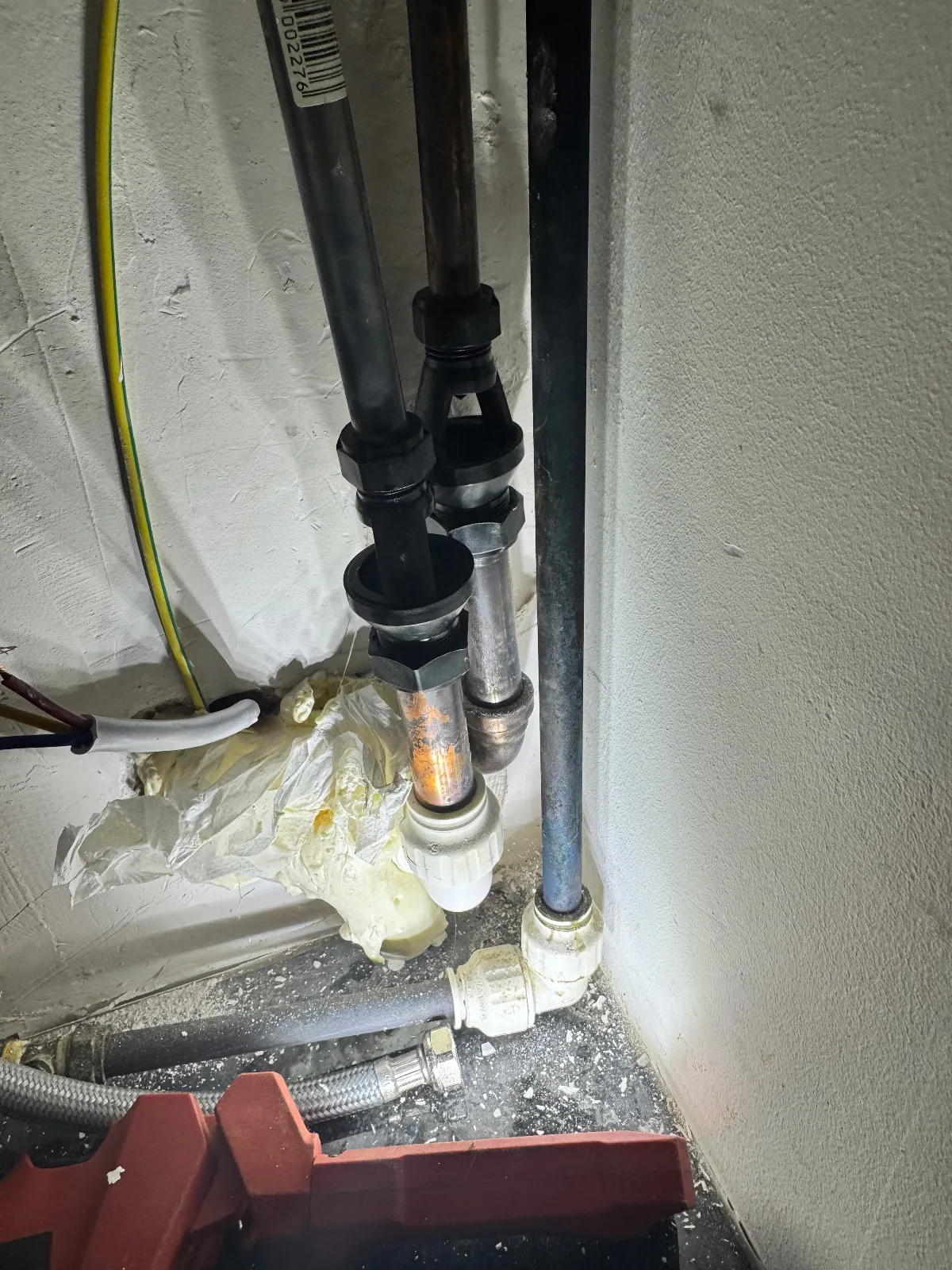
What the visit covers
- Confirming the shell or coil has failed before anything is drained
- Matching type, capacity, coil, boss positions and pipe layout to the old unit
- New compression nuts and olives, and the valve group, vessel and tundish checked against the new cylinder
- Refill, air purge, thermostat setting and a recheck of every joint after the first heat cycle
Fixed prices
What it costs
- Cylinder replacement, labour
- Labour and miscellaneous parts. Cylinder priced separately.
- £1,450Plus cylinder
- Cylinder troubleshooting and diagnosis
- No call-out fee.
- £180Fixed price
No VAT is charged
There is no call-out fee
Cylinder price depends on type, size and your preference; we recommend the right one.
Order of work
Prove the cylinder is the fault
A leak at a boss or union, a tripped cut-out or a dead element can look like a failed cylinder. A sound swap starts by finding which it is.
Match the replacement
Vented or unvented, direct or indirect, litres, height, diameter, coil connections and immersion boss positions are read off the old unit and its data label.
Isolate, drain and swap
Electrical supply and heat source off, mains closed, cylinder drained through its drain cock, pipework disconnected, old unit out, new unit levelled and connected.
Refill, purge and recommission
Air is purged before any heat is applied. The thermostat is set, the first heat cycle is watched and the joints and valves are checked again afterwards.
Is a like-for-like swap the right job?
Swapping a cylinder is the last step, not the first. A corroded cylinder body that is weeping through its shell is a swap. A dripping union, a failed immersion element, a stuck two-port valve or a tripped thermal cut-out is not, and a new cylinder would not cure it. A hot water cylinder diagnosis separates the two before a drain-down is started.
Decision rule: replace when water is escaping from the shell or the coil, or when the repair needed would cost more than the cylinder is worth given its age. Repair when the fault sits in a part that can be changed. The wider reasoning is in repair or replace a hot water cylinder.
Like for like also means the same arrangement. Changing from a vented to an unvented cylinder, moving the cylinder or changing its heat source is a different job with its own checks, covered under unvented cylinder fitting.
What does replacing a hot water cylinder cost?
A like-for-like cylinder replacement is a fixed price of £1,450. That covers labour and miscellaneous parts. No VAT is charged, and there is no call-out fee.
The cylinder itself is priced separately. It is chosen from a price list by type, size and your preference, and we recommend the right one for your home. Confirming that the cylinder has failed is a cylinder diagnosis, a fixed price of £180.
We cover London inside the M25, 24/7.
What is checked before the old cylinder comes out
Before it is touched, the old cylinder should be measured and its label read. Height and diameter decide whether the new one fits the cupboard with room to work. The positions of the immersion bosses and coil connections decide how much pipework has to move. The data label gives the capacity, the working pressure and, on an unvented unit, the pressure the expansion valve is set to.
On an unvented cylinder the valve group, expansion vessel, temperature and pressure relief valve and tundish should be looked at as a set. Approved Document G and the manufacturer manual set out where the tundish sits and how the discharge pipe falls and ends, and an installer should be able to say which they are working to. If the old arrangement does not meet that, the swap is the moment to put it right.
An unvented cylinder discharging steam or very hot water has lost thermal control. Isolate the heat source, keep clear and call an engineer, and never cap, plug or bypass a relief valve or tundish.
The swap, in order
Power to the immersion heater is isolated at the double-pole switch and the boiler or other heat source shut down. The mains to the cylinder is closed, a hose is fitted to the drain cock and run to a drain below the level of the cylinder, and a hot tap is opened to let air in. The first water out should be treated as hot.
Joints are broken and the old cylinder removed. New compression nuts and olives should go on rather than reusing worn ones, because a cylinder swap is when an old olive that has been under compression for years is most likely to leak. The new cylinder is levelled and connected, and the valve group, expansion vessel and discharge pipework are checked against the manufacturer instructions.
The cylinder is filled with the hot tap open until water runs, and the other hot taps are opened in turn to purge air. Nothing is switched back on until the cylinder is full, because an immersion element powered while dry will fail quickly.
Recommissioning and the recheck
The thermostat is set to the manufacturer instructions. HSE legionella guidance, written for non-domestic premises, gives 60°C or above as the storage temperature for hot water cylinders, and it is the usual benchmark at home. The first heat cycle should be watched and the tundish checked for any discharge as the water warms and expands. A small intermittent drip during first heat-up can mean the expansion vessel precharge does not match the set operating pressure of the cylinder, or that a valve seat is passing, and the engineer decides which.
Joints should be checked again once the water is hot, because metal moves as it warms and a joint that was dry cold can weep hot. On an unvented cylinder, ask for the commissioning record, so the next engineer can see what was set and when.
A swap leaves most householders with questions about cost. The fixed price is set out under the cost heading above and on the pricing page, and the cost guide for replacing a cylinder shows how typical UK market figures are built up.
Can I replace a cylinder myself?
A vented cylinder swap is plumbing that some householders attempt, but the electrics at the immersion heater are not a householder job and the drain-down carries a scald risk. An unvented cylinder is not a householder job. It is notifiable work under Building Regulations Part G and needs a competent installer. The limits are set out in can I replace a hot water cylinder myself, and draining a hot water cylinder safely covers the one step people do attempt.
Questions people ask
How much does it cost to replace a hot water cylinder?
Labour and miscellaneous parts are a fixed price of £1,450, and no VAT is charged. The cylinder is priced separately by type, size and your preference, and we recommend the right one.
How do I know my cylinder needs replacing and not repairing?
Water coming from the shell or the coil, rather than from a union, valve or element boss, means the cylinder has failed. Anything else is a part that can usually be changed. A diagnosis finds which it is before you commit to a swap.
Can the new cylinder be a different size?
It can, but then it is not strictly like for like. A larger cylinder changes the pipe runs, the shelf or cupboard space and the load on the floor, since water weighs one kilogram a litre. Sizing is covered in the cylinder replacement guides.
Do I need to turn the electricity off to drain a cylinder?
Yes, at the immersion heater isolator at least. Powering an element that is out of the water destroys it, and the electrical side is never a place to improvise.
Will the old valves be reused?
It depends on their age and condition. Compression nuts and olives are replaced. On an unvented cylinder the valve group, tundish and expansion vessel are worth inspecting and replacing where they show scale, corrosion or past discharge.